Category Archives: A Life Gamer’s Journals

What TTRPGs Can Teach Us

Photo by Victoria Ichizli-Bartels (the author of this article)

***

On October 8, 2025, I made the following entry in my journal:

“I really love this notebook and the possibility to write in this diary.

“I had some brief disconcerting thoughts, but quickly found what I wanted to do next.

“Simply having this space here for whatever thoughts might come is nothing short of fantastic and magical.

“Definitely reassuring.”

As I read it today, I realized that the fact that I wrote this entry in four separate lines was not a coincidence. It sounds like a recording of a conversation. Each line has a slightly different voice to it, even if this group in my head seems to agree about what they are discussing. This journal entry looks like minutes or notes of a meeting that took place in my head. Or we could also say a role-playing game (RGP) round.

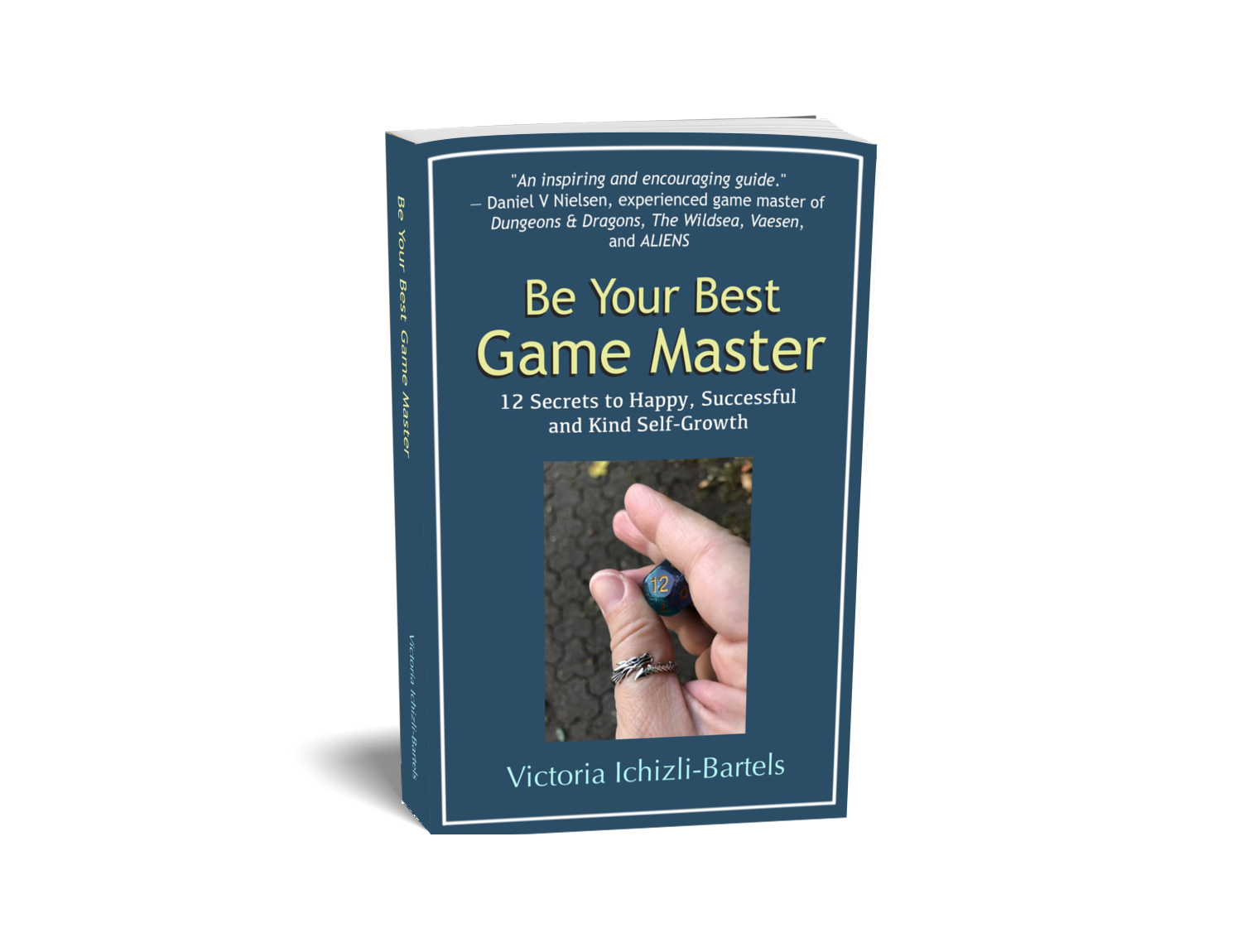
Looking a little deeper into tabletop RPGs (TTRPGs) and learning from them was an enormous epiphany for me. It goes closely after being aware that anything in life can be considered a game, which we (co)design, (co)develop, and (co)play. That is probably why I called this epiphany Secret 2 in my book, Be Your Best Game Master: 12 Secrets to Happy, Successful, and Kind Self-Growth.

Here it is:

Secret 2: There is at least one endless role-playing game taking place in your head. Seeing, recognizing, and playing it, as well as any others, will empower you.

I came up with the idea of thinking of my emotions and thought processes as role-playing games myself. And it came as a flow of questions. Could it be that way? Could there be parallels between this hugely popular game genre and what happens in our heads? Could we learn from the masters of TTRPGs and tap into their wisdom to help us master the conflicting emotions and confusing thoughts?

Reading and researching gave a resounding “Yes.” Just see the following two quotes I found early in that research and shared as epigraph to my book Be Your Best Game Master:

“A roleplaying game is a conversation.”
— Justin Alexander, So You Want To Be A Game Master

“Self is not a monologue, constructed by our mind in isolation, but the product of an ongoing conversation; it is dialogic, born of our interactions with significant (and less significant) others.”
a summary of The Self Illusion by Bruce Hood

Isn’t this realization inspiring? We often blame ourselves for confusing thoughts or emotions washing over us. We ask ourselves, “Why am I that way? Why can’t I or my life be different, like that other person and their life?” We blame ourselves for perceived failures and fear that our successes will turn out to be “fake news.”

The wisdom of TTRPGs says that none of its players, not even the game master, is responsible for how the story of this game turns out. All players tell the story together. The game master might have a prompt to start the story, and also have an eye on the rules of the game published by its developers, as well as the twists, maps, and tools the game master prepared before the game round, but how the story goes, all players can find out only together.

So, imagining your mind and your emotional self as a group of players responding to life can be enormously helpful. Because then you would be compelled to discover who is saying what inside you.

Here is what I have written in one of the final chapters of Be Your Best Game Master:

To navigate the unexpected challenges of life, remember that you are not alone; you are a group of talented individuals, and each of them can contribute to your team’s well-being and success. And you can all have fun living your life together.

***

If you as many others want to learn how to explore themselves kindly and successfully and how to reveal to the world around them and to themselves the best of the best they have inside them, then let Be Your Best Game Master be your trustful companion showing you how you can live in an exciting and rewarding discovery mode of your emotions, feelings, thought processes, and experiences.

Read this book and uncover the collective power of various aspects of yourself, as if they were players in very special role-playing games, your mind’s and life’s RPGs, and keep on winning these collaborative games.

⇒ Click to buy on Amazon ⇐
⇒ Click to buy also elsewhere ⇐

A Safe Space For Being Vulnerable

Photo by Sixteen Miles Out on Unsplash

***

The events described in some books remain in them. Such are fiction books and memoirs. The stories described there stay there. The effect of them might go on, but the stories remain between those covers and in the past of their occurrence, in case of memoirs, or in your reading and experiencing their stories, which applies both to memoirs and fiction.

The same applies to the anecdotes many non-fiction authors share in their books. That includes many of mine.

However, the concepts and methods shared in self-help, self-care, motivational, and other such books often continue to have an impact after publication, also on their authors.

And so does the idea of living in a discovery mode, which I shared in my latest book, Be Your Best Game Master.

While writing that book, I recommenced journaling. It adds up to gameful journaling, where I record the daily scores in my self-motivational and self-care games, which I have been doing for many years in a row.

My narrative journal today is very different from the ones I kept in my twenties. In the coming blog posts and articles, I will share bits of it and excerpts from my books, including the inspiring pearls of wisdom I quoted there.

Here is the first entry in my narrative life gamer’s journal, written as a letter to myself.

***

October 8, 2025

Hi Sweetie,

I tried to write to you sometime back, but then I thought journaling wasn’t for me. I also discovered gameful journaling with all those points and badges, and enjoyed it very much.

But there are still some hiccups in navigating my life that make some days hard to cope with, especially given the situation in the USA, Ukraine, and the world, in general, right now. Those concerns are sometimes more comfortable than pursuing what I want to do, especially if it is just me saying I want to do something and no one else is explicitly requesting it.

Today, I am starting to journal again. That comes partially from the idea in an article about optimism in the DR (Danmarks Radio (DR), Denmark’s national public-service broadcaster) that Michael (my husband) sent me. The idea was to journal struggles and write down possible solutions.

So, I will try that and see what happens. I will also read the recent book on journaling (I referred here to The Book of Alchemy: A Creative Practice for an Inspired Life by Suleika Jaouad), and both this book and writing here will be great research for my next self-gamification book, the working title of which is Gameful Journaling.

It really feels great to write down my feelings.

Thanks for these beautiful moments. I will see you in a bit, at the latest, when I remember this safe space, when I worry.

***

Secret 1 of Being Our Best Game Masters:

Games — of course, not all, and not the same for all — can be such safe spaces for us to be ourselves, to express ourselves, to be our most authentic selves. Learning and being inspired by games can be life-changing, and helping create such safe spaces outside the realm of games.

The closeness between games and life outside of the realm of games was the secret number one, which I shared in my book Be Your Best Game Master. Here is how I formulated it:

“Secret 1: Your life is a collection of games you design, develop, and play. That includes the games happening inside you.”

***

A pearl of wisdom:

In the first chapter of Be Your Best Game Master, I shared several pearls of wisdom. I often share Jane McGonigal’s piece on the main elements of games. But here is another I shared there, which I’ve shared only once more so far, but which I probably should share again and again, because it brilliantly shows that everything in life is a game. Here it is:

“As soon as you have a goal, you have a game.”

— Jason Fox, The Game Changer, The Game Changer: How to Use the Science of Motivation With the Power of Game Design to Shift Behaviour, Shape Culture and Make Clever Happen

And here are some thoughts I shared in that chapter.

“Everyone’s life is full of turns. My life has taken me to different countries, where I’ve met many wonderful people, including the person I fell deeply in love with, married, and had our two fantastic children with.

“However, some of the turns didn’t involve traveling to another country, meeting someone, or trying to do something new. One of the most dramatic and beautiful turns in my life was discovering a thought in a book.”

***

To discover more, read Be Your Best Game Master. You can get your copy below:

⇒ Click to buy on Amazon ⇐
⇒ Click to buy also elsewhere ⇐

New in October 2025: Be Your Best Game Master

Photograph by the author

***

In my new book, Be Your Best Game Master: 12 Secrets to Happy, Successful, and Kind Self-Growth Practices, I shared that each of my books, their writing, and their publication was a special turning point in my life. That also happened for Be Your Best Game Master.

Toward the end of the last chapter, I wrote:

“I will forever be grateful to have embarked on the adventure of writing this book and been involved in all the moments this adventure entailed, both exciting and scary, uplifting and frustrating, revealing and confusing, and many in-between. I realize now that I had never practiced self-compassion, self-respect, self-love, and ultimately self-growth as genuinely, truly, happily, kindly, and successfully as I did near the end of working on this book. My relationships with those around me have become warmer, stronger, and more supportive in both ways.“

And I experience every day that this adventure of discovering myself continues.
I will let the book introduce itself, including the reasons for its existence. Here is the introduction in its full shape (5-10 min read). And at the end of it, you will find the book’s description and links where you can get a copy.

 ***

Most of us have ideas about what makes us as persons. If we are not quite sure or when enticed by others, we take personality tests that label us as introverts or extroverts, skilled or not at listening or expressing ourselves, and other skill sets. Then we use those labels to describe ourselves or explain and justify our behaviors.

At the same time, most of us have done something, and most probably more than once in life, described either by those who know us or ourselves as entirely out of character. We blurt something in a conversation, wondering where those words came from.

Every day, we find ourselves confused in small and big ways, not only by what occurs around us but also within our own minds. All the while, we strive to grow and achieve our dreams and goals.

This complex adventure, which comprises a human life, enticed me to write Be Your Best Game Master: 12 Secrets to Happy, Successful, and Kind Self-Growth.

The process of writing this book mirrored the sophistication of a human life. It was both exciting and challenging, also because this book has experienced a drastic metamorphosis multiple times, until it became what you are reading right now. Researching and writing Be Your Best Game Master was a growth process with a steep learning curve for me.

We all want and need to grow. Both physically and mentally. Some of the physical growth slows with time, but to live a full and rewarding life, we should never stop learning and growing mentally.

But how do we grow successfully and joyfully? And how can we take care of ourselves during this growth?

For myself, I discovered many different processes during my self-growth. I am a leader, life coach, parent, and partner for myself, and at times I act as my own therapist. I also explore my emotions, feelings, and thought processes, and try to understand them. By letting myself be led, taught, and live out my inner child, I might act as my own patient. Additionally, there is a researcher, an anthropologist, and a sophisticated culture of one person being studied with curiosity [See more about the idea of being our own anthropologists and studying ourselves as cultures of one person in Chapter 5, “Compassionate Listening.”].

All these processes sound like roles in a role-playing game. In my book, Actual Real-Life Role-Playing Games, I claimed that everything in life is a form of role-playing game (RPG). But only recently have I realized that all those emotions and feelings whirling inside me, and the thought processes running through my head, are one or even more RPGs, too.

Exploring this idea, learning about the gameplay in RPGs in their classical meaning, and writing and rewriting this book several times made me aware of one specific role we all play in the games of our lives. And this is the role of a game master.

The title of the book is Be Your Best Game Master, because we are all game masters of our lives, and the more we learn and grow as we live, the more skilled game masters we become. And the best thing about it is that we can consciously resolve to be our best game masters we can ever be.

When I share ideas in this book with people who have never heard of them, I am met with surprised and excited expressions on their faces, as if I were sharing big and exciting news or even a secret with them. Even after living gamefully for over a decade and writing about this possibility for almost as long, I still feel like I discover many of those secrets myself, some of which have been practiced and known for a long time, but are often experienced anew.

Being my own game master, especially in the RPG that exists within my mind and body, is a relatively new concept for me. It has been about a year, and it is short compared to more than a decade of living gamefully. On the other hand, playing a daily RPG for a year will sound like enough to pinpoint lessons learned to many experienced RPG players. When I think of these lessons, I can identify many of them. I thought of picking ten and concentrating on them, but then two more, equally important, came into my field of view.

Thus, Be Your Best Game Master is a collection of twelve secrets, which represent my biggest epiphanies, both over the years of living gamefully and over the past year of consciously being my mind’s and my life’s game master. And since these gameful practices and perspectives helped me grow happily and successfully, while treating myself and those who interact with me with kindness, this book’s subtitle is: 12 Secrets to Happy, Successful, and Kind Self-Growth.

As you might guess, this book is divided into twelve chapters. They are relatively short, with each one readable within thirty minutes, and some even within ten. The twelve secrets build upon one another and are tightly intertwined with each other, which you will see through numerous references between them. Each chapter begins with the formulation of the secret in focus, followed by a detailed discussion of my discoveries as I explored and contemplated each one. At the end of the book, you will find a chapter listing all twelve secrets. I see this list as your game master’s cheat sheet.

Initially, I wanted to use as few quotations as possible in this book. However, the fact is that I love reading and quotations. So, this book is not different from my others in this respect. But if you read my other books, you will discover many new quotations I haven’t used before. The research for this book was akin to observing other life gamers playing various games in their lives, including RPGs in their traditional sense.

Throughout this book, I refer to my previous works on living gamefully. These include my books, as well as articles I have published online, most of which were published on Medium. Some of these articles are excerpts from my books, and others are standalone pieces. You don’t have to be a Medium member or subscriber to read my articles. All of them are available for free reading.

If you wonder how best to explore the content of this book, I recommend reading it like a novel, or, given its length, a novella. And just as with a novel or a novella, I recommend that you don’t expect reading it to change you. You change every day, every moment anyway. You don’t need to push the change. I enjoy the idea of embracing the change process, whatever it may be.

I hope the only expectations you have for this book are for it to be interesting, fun, and engaging to read. And I hope this book will fulfill these expectations. If it will, then it will be of value. And it will become your awareness booster. That is one of my favorite expressions nowadays, and I find it speaks for itself.

If I were to summarize Be Your Best Game Master with two words, then I would say that this book is about practical self-compassion. Practicing self-compassion is inherent to practicing self-love and involves taking responsibility for how you feel and act while pursuing something, even if others, including significant others, might disapprove. It is not about feeling blissful all the time, because you cannot, and it would not be exciting otherwise. It is about exploring and discovering yourself at every step.

Let’s begin!

***

In this unique and surprising book, an avid life gamer with over a decade of experience of living gamefully, Victoria Ichizli-Bartels, shares twelve secrets to happy, successful, and kind self-growth practices.

Drawing on the wisdom of games, in general, and that of tabletop role-playing games, in particular, Be Your Best Game Master provides practical guidance on cultivating self-compassion and self-love as you lead, educate, heal, coach, parent, support, and partner yourself through life.

If you as many others want to learn how to explore themselves kindly and successfully and how to reveal to the world around them and to themselves the best of the best they have inside them, then let Be Your Best Game Master be your trustful companion showing you how you can live in an exciting and rewarding discovery mode of your emotions, feelings, thought processes, and experiences.

Read this book and uncover the collective power of various aspects of yourself, as if they were players in very special role-playing games, your mind’s and life’s RPGs, and keep on winning these collaborative games.

***
⇒ Click to buy on Amazon ⇐
⇒ Click to buy also elsewhere ⇐

A Life Gamer’s Chronicles – March and April 2025

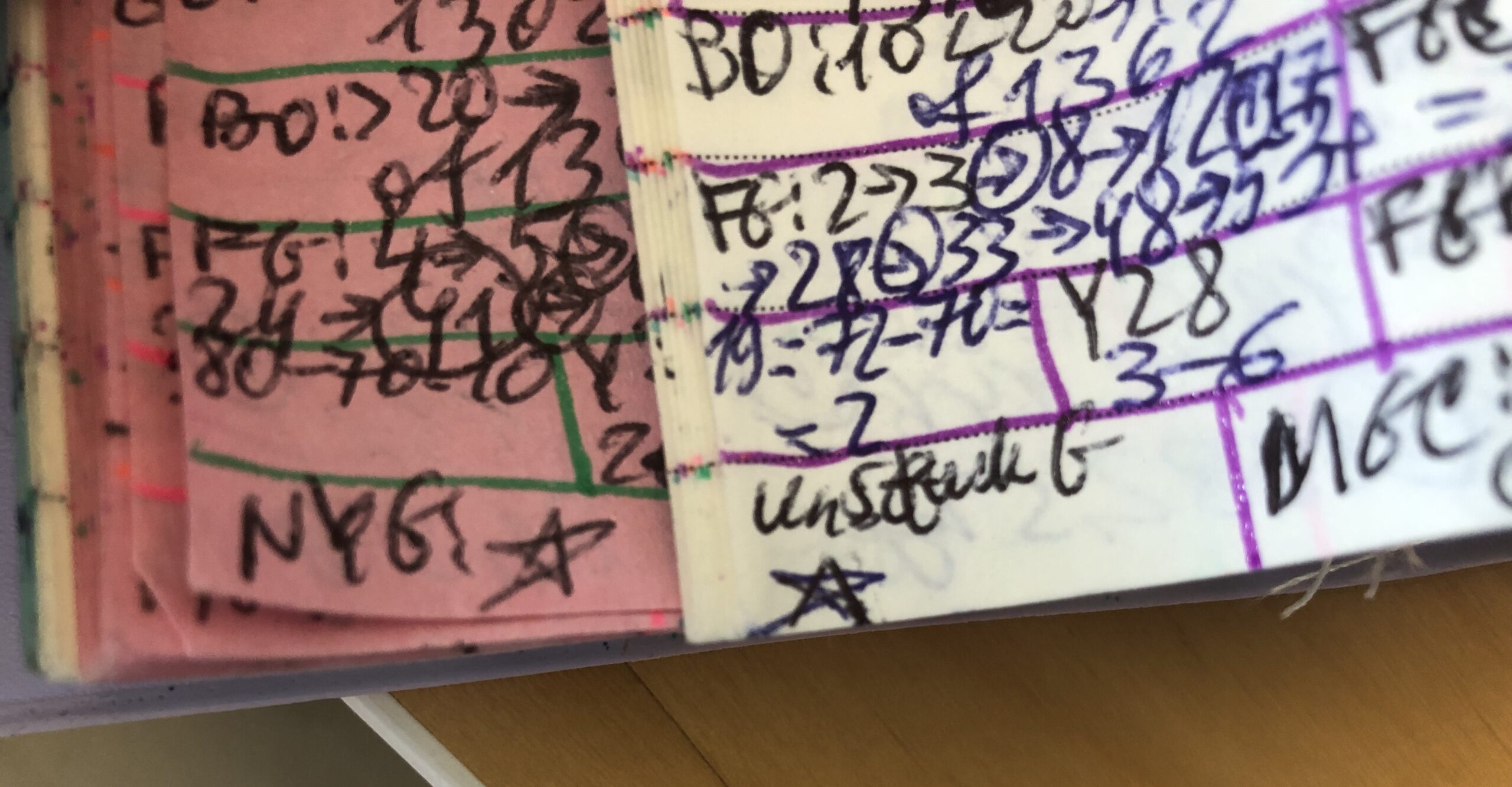
No YouTube Game (NYG) and Unstuck Game with a star each
As in the past months, March and the start of April also saw some game evolution in my real-life game collection.

The center of attention was the feeling of being stuck on something and helping myself to get unstuck.

It all started with the following.

In the past, when I was upset, down, or exhausted, I often opened a browser window on my computer, typed the letter “Y,” and accepted the browser’s suggestion to open YouTube. Then, I opened one of the suggested videos and watched it. Then I clicked another one and watched it. Once in a while, I might have searched for a specific topic I was interested in. But more often than not, it was random surfing and watching. Even knowing that taking a break, a nap, standing up, and going away from my desk would be more helpful and restful for me didn’t help me do so.

After much berating, criticizing, and even pep-talk, and no desired results, I decided to design a game for myself. I had done so in the past, but those simple designs were not enticing enough for me to engage in them. Recording badges (one per day) for not watching YouTube was ineffective, and I soon lost fun earning the rewards and fell back into my YouTube routine. I needed something a little more sophisticated.

So, I designed a No YouTube Game (NYG) for myself. In this game, I rewarded myself with a small drawn star badge if I hadn’t watched YouTube randomly on that day. Whenever I felt drawn to open YouTube and surf there, I resisted this urge by switching to another activity. Each time I resisted that urge, I drew a line/element of that star and finished its outline at the end of the day or the next day.

The No YouTube Game evolved further into the Unstuck Game. That evolution happened because after playing NYG for some time, resisting watching YouTube was easy. However, I started reading news and surfing through them, often letting myself get upset about them. So, I felt stuck. Then I had the idea to follow what I like calling Fun Detecting Antenna (my awareness of what is fun for me), but realized that my feeling stuck was not only about fun. So shortly after observing the dilemma, I found the right name for this little game: the Unstuck Game. This game is about awareness and detecting the moments when I feel stuck. When I do, I make sure that I don’t judge myself and open my eyes and mind toward what I could do instead.

And this reminds me of the little game I once described on Medium: the “Instead Of” Game. Here is the link to it:

The “Instead Of” Game: The Briefest but Probably the Most Crucial of All Self-Motivational Games | by Victoria Ichizli-Bartels | Gameful Life | Medium

***

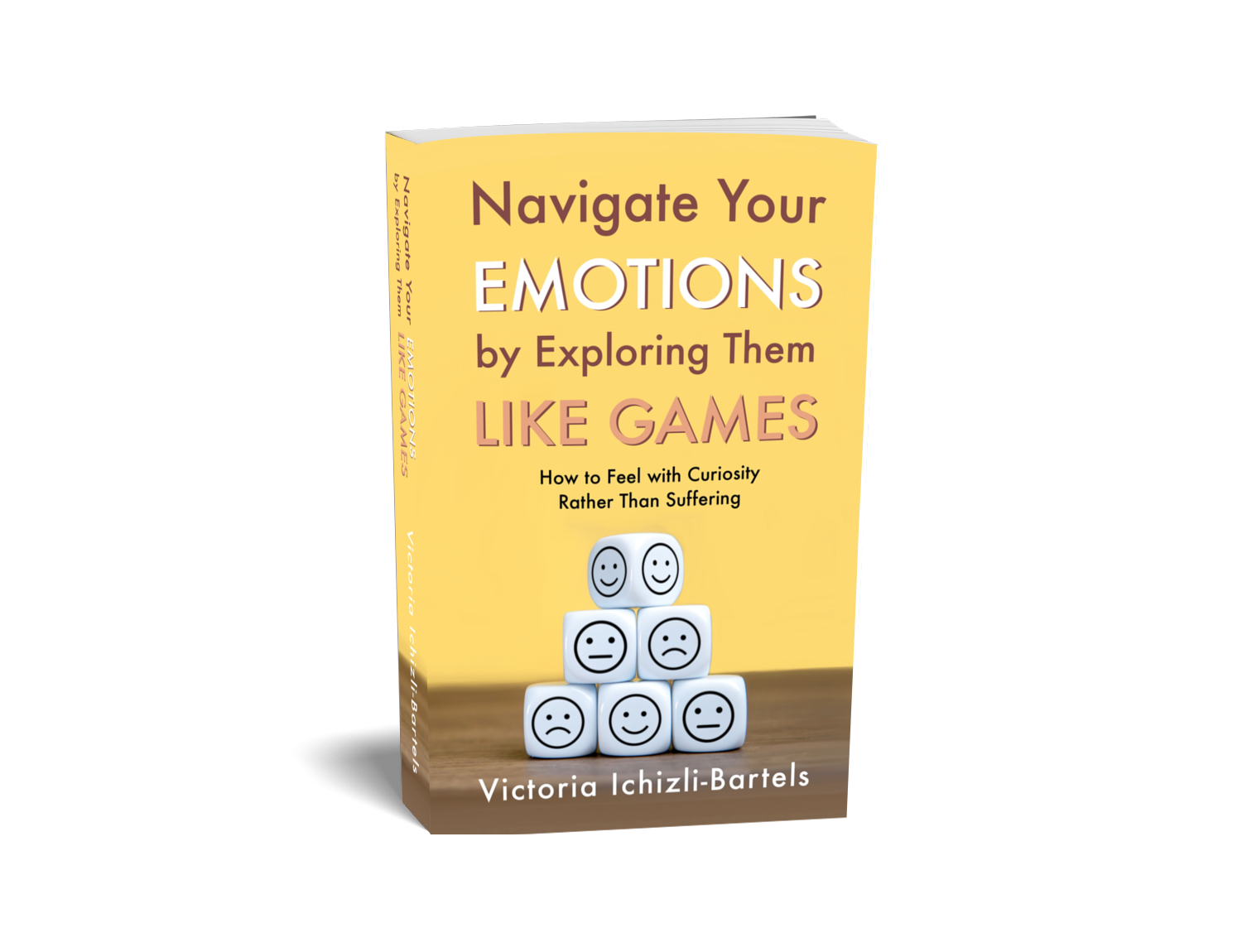
The feelings of being stuck and unstuck bring whole cocktails of emotions. I was thrilled to have discovered the possibility of exploring emotions, feelings, and experiences like games. You can find out more about this in my book Navigate Your Emotions by Exploring Them Like Games:

How to Feel with Curiosity Rather Than Suffering

⇒ Click to buy on Amazon ⇐
⇒ Click to buy elsewhere⇐

A Life Gamer’s Chronicles – February 2025

(Re)introduction of BRG (Book Race Game) and PRG (Project Race Game); See the middle of each page between NR and GrG games. These stand for Reading Nora Roberts’ Books Game and Gratitude Game. The picture illustrates my scores this past weekend (Feb. 22 and 23, 2025)

By the middle of February, I was sure my report on life gaming this month would mainly focus on gaming itself and not the designs of my real-life games or their adjustments. But all that changed when I realized I needed to adjust my reading games.

I realized that I was jumping to the end of some books to see how they ended and was suppressing my wish to read more in other books. So, I decided to have not only one book in addition to Nora Roberts’s books, which I read more than once on any particular day, as I did in January with the Read for Health Game (RFHG), but in others too. I decided to bring back the Book Race Game (BRG) but with a modified feedback approach. I brought this building stars one segment after another after reading a little in each book of the race. I love how the books “race” for my attention in this game or how I help one book win by reading more in it on any particular day. Reading various books helped me stop moaning that I was still not done with any of the books. Instead, I enjoyed reading and learning about sometimes unrelated topics on any particular day.

After having success and fun with reading and learning, I realized that I had a similar situation with motivating myself when attending to some projects and activities. I procrastinated on some of the projects, especially those outside my consulting work, and had trouble starting even a short two-minute run on them, even if I wanted to do them very much, and wrote their drafts in my head. But daydreaming about writing them didn’t lead to making progress in writing them on screen or paper. So, I also decided to apply the same “race design” to my projects. I used to play the Project Race Game (PRG) in the past, but without the star-collecting feedback system.

Writing this blog has also been a part of the Project Race Game today. Although I had other things like HouseHold Game (HH) racing along, this blog post raced mainly against the latest book I wrote on S1000D. Each part/segment I map/compile/write builds a start for that project, and each paragraph or group of paragraphs in this blog builds another star. And this paragraph has just brought both projects head to head.

I enjoy playing the book and the project race games. These new versions of both games are still fresh, and I love playing them. However, I have noticed that I needed to observe my emotions closely. After the first day of this version of the Project Race Game, I noticed the need to slow down. In the evening of the first day, I felt pleasantly tired, but the beginning of the second day started with anxiety about whether I would manage at the same pace and whether I would manage as much as the day before. The Emotions Exploration Game (EEG) came to help here. I noticed how opposite emotions started popping up and “waving enthusiastically” to me, drawing my attention to them. So, the confusion and weariness were the result. Noticing all these emotions helped me to realize that not all days in my fun race games need to be hugely dynamic. Slow, mindful, relaxed, and even sad could be helpful too.

So, my highlight games this month are, in alphabetical order:

  • Book Race Game (BRG)
  • Emotions Exploration Game (EEG)
  • Project Race Game (PRG)

I look forward to discovering which real-life games will engage and surprise me next month.

Wishing you a beautiful March and a gameful start to Spring.

***

My game plans and score sheets might appear utterly complex, even if I find my way quickly through them. I am asked once in a while what game framework or game plan I developed over the years, which I would recommend when starting to turn life into games, i.e., to live gamefully. And every time I contemplate it, I come to the same answer. It started for me with the 5 Minute Perseverance Game (5MPG), and if you want to try turning your life into fun games, then it is a great place to start.

I dedicated a little book to it with the same name, 5 Minute Perseverance Game. The book is available in two editions. I recommend checking out the second edition, which was published in 2021 and available since February 8, 2025, in German.